
How to Search for a Providence County Warrant
There is no official statewide public warrant database in Rhode Island. That surprises many people. Instead, warrant information lives with the court that issued it and with law enforcement. The most reliable public step is the court docket. A warrant event may appear in the register of actions for the underlying case.
So a Providence County warrant search runs in two parts. Check the court docket through the Judiciary Public Portal. Then call or visit the clerk for the court that issued the warrant. Do not assume a phone call alone clears anything.
- Search the Public Portal for the case by name or case number.
- Look for a bench warrant or failure-to-appear event on the docket.
- Note which court issued it, since that controls the next step.
- Contact that clerk's office to confirm the warrant status.
- Follow the court's instructions to appear or to pay.
The court dockets page explains how to read the register of actions where a warrant event would show.
Why There Is No Providence County Warrant Database
Rhode Island runs a small, state-based system. There is no county sheriff that books arrests and posts a county warrant list, the way larger states do. The state Division of Sheriffs handles court security, transport, and service of process, but it does not publish a public warrant lookup. Warrants instead attach to the case in the issuing court.
That structure changes how you search. You do not look for a county "wanted" page. You look at the court docket for the case, and you call the right court clerk. For a warrant from a municipal court, you contact that city or town court. The court that issued the warrant is the office that can confirm and clear it.
Failure to Appear and Bench Warrants
The clearest official guidance comes from the District Court criminal page. It says that if a defendant signed a notice to appear and then fails to appear, the judicial officer will order a bench warrant for arrest. The page tells the person to report to District Court right away to appear before a judicial officer on the warrant.
The same page is blunt about one thing. The District Court Clerk's Office does not continue or reschedule court dates. So you cannot simply call and move a date. If you missed court, the fix is to appear, not to wait.
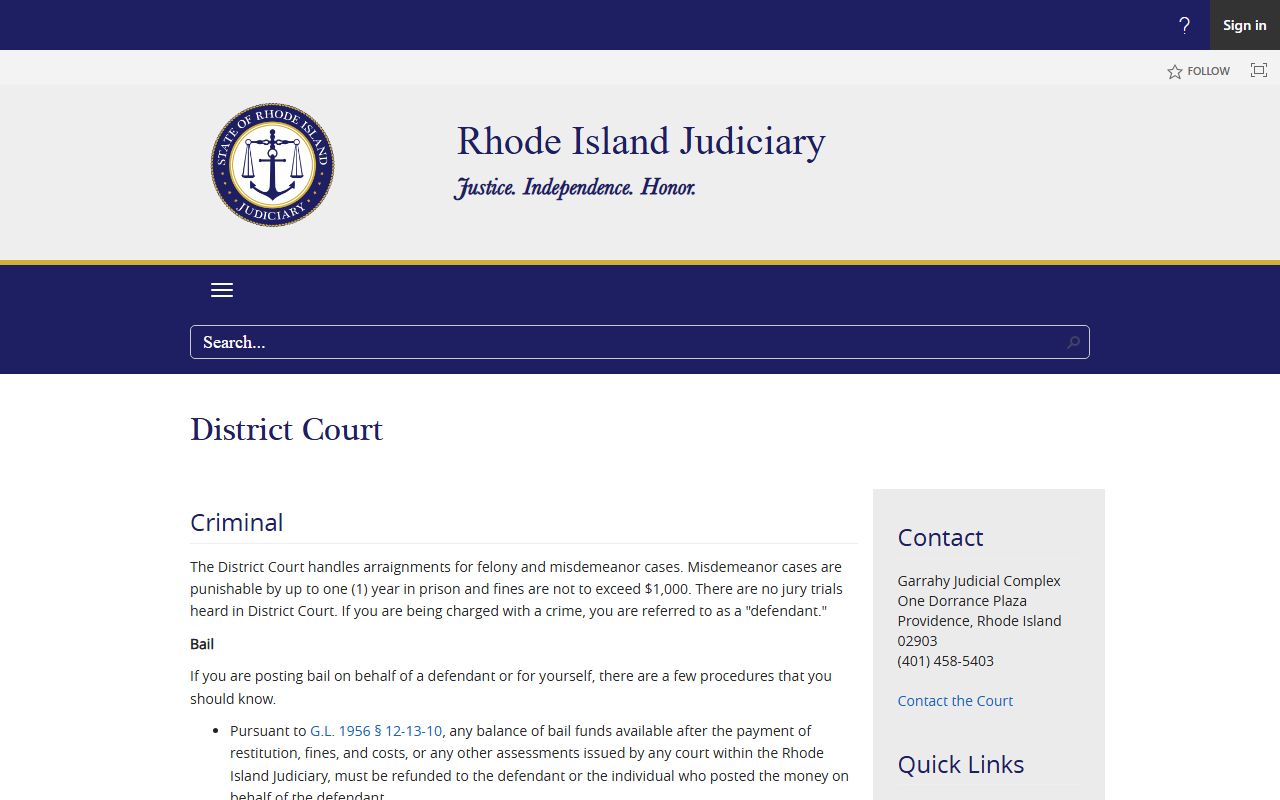
The District Court criminal page above is the source for the failure-to-appear and bench-warrant rules described here.
Overdue Court Fees and the $125 Warrant Fee
Money problems can also trigger a warrant. The Judiciary's Overdue Court Fees page says that for Superior and District Court cases, failing to appear or failing to pay by the due date may result in a bench warrant and an extra $125 warrant fee. A person may also be held in contempt.
There are non-warrant consequences too. The page lists tax refund interception, blocks on license or registration renewal, credit reporting, and referral to collections. If you cannot pay, ask the court about an ability-to-pay hearing or a payment plan before a warrant issues.
The court also keeps a public inspection list of overdue obligations. So an unpaid balance is not just a private matter between you and the clerk. The lesson is to deal with court money early. A small balance can grow with the warrant fee, and it can block things you need, like a license renewal, long after the original case.
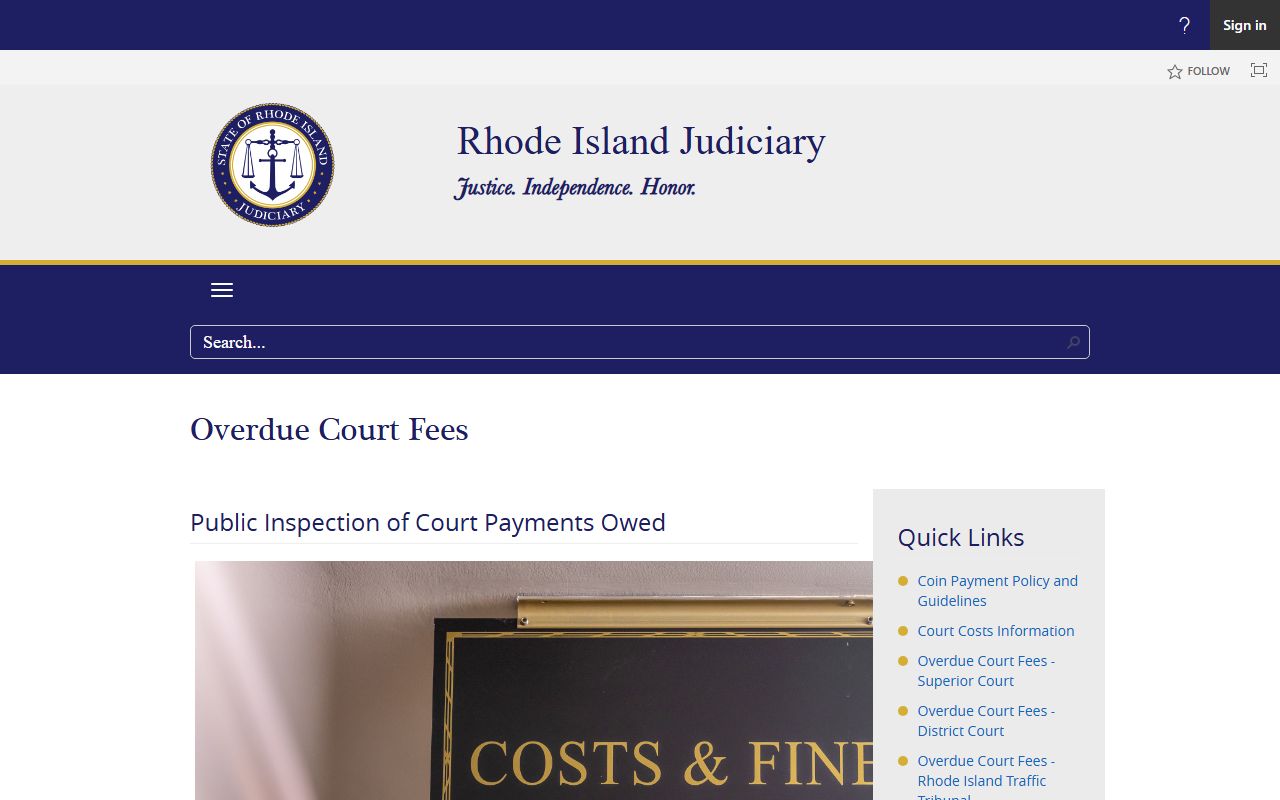
The overdue fees page lays out the warrant fee and the payment options noted above.
Types of Providence County Warrants
Not every warrant is the same. The type controls who issued it and how you clear it. Some come from a judge, some from a charge, and some from another state. The table below sorts the common kinds.
| Warrant Type | How It Arises | Authority |
|---|---|---|
| Bench warrant | Failure to appear, contempt, or unpaid obligation | Judge or judicial officer |
| Arrest warrant | A charge based on probable cause | Court on complaint |
| Search warrant | Authorizes a search or seizure | Title 12, Chapter 5 |
| Fugitive / extradition | Wanted in another state | Courts with Sheriffs and DOC transport |
| Municipal warrant | Arises from a municipal court matter | Local court under state law |
Arrest and search warrant rules sit in Title 12. See the arrest warrants chapter and the search warrants chapter.
A bench warrant is the kind most people meet. It does not start a new charge. It responds to something that went wrong in an existing case, like a missed date or an unpaid balance. An arrest warrant is different, because it begins from a charge and probable cause. Knowing which one you face tells you whether the fix is to appear, to pay, or to seek counsel first.
Warrant vs Summons in Providence County
A warrant and a summons are not the same. A summons asks you to appear on a set date. A warrant authorizes police to bring you in. Many bench warrants exist only because a person ignored a summons. The table sorts the difference.
| Point | Summons | Warrant |
|---|---|---|
| What it does | Orders you to appear or respond | Authorizes arrest or a search |
| When it issues | To start or schedule a case | After a missed date or a charge |
| Best response | Appear or respond on time | Confirm it, then appear or pay fast |
If you still hold the summons, follow it before it turns into a warrant. Once a warrant issues, the stakes go up.
What a Providence County Warrant Record Shows
When a warrant event appears on a docket, it carries a set of details. The exact view depends on the court and the case type. A typical warrant entry includes the items below.
- The case number and the court that issued the warrant.
- The party name and the reason, such as failure to appear.
- The date the warrant issued.
- Any bail or financial condition tied to the case.
- The status, such as active or recalled.
Remember, the docket may show a warrant event without opening the full document. Confirm the live status with the clerk before you act. A docket can lag, so a recalled warrant may still read as active for a short time, and a fresh warrant may not post the same day it issues.
How to Resolve a Providence County Warrant
Acting early is the best move. An open warrant does not improve with time, and it can lead to arrest at a traffic stop or a routine contact. Bring valid ID and your case number. If money is the issue, bring a financial statement so you can ask about a payment plan.
- Search the docket to confirm the warrant and the issuing court.
- Call or visit that clerk's office; do not assume a call cancels it.
- If it is a District Court failure to appear, go to court promptly as instructed.
- If it is a money issue, ask about an ability-to-pay hearing or a plan.
- If arrest or jail is a risk, talk to a lawyer or the Public Defender first.
Keep proof of everything you do. Save receipts for payments and notes on who you spoke with at the clerk's office. After you appear or pay, ask the court to confirm the warrant is recalled. A warrant is not cleared until the court enters that on the case, so do not assume payment alone closes it.
Bail Commissioners and After-Hours Arraignment
Rhode Island uses bail commissioners for times when court is closed. Under R.I. Gen. Laws § 12-10-2, a bail commissioner or justice of the peace can conduct a special arraignment when the court is not in session. That can set initial release conditions before the next court day.
This matters after an arrest on a warrant at night or on a weekend. A person may see a bail commissioner first, then the court later. The custody side runs through state facilities, so the inmate records page covers how to find someone held in Cranston. Family and friends often ask where to start, and the answer is the state inmate search plus the court docket for the case.
When to Contact a Lawyer
Some warrants carry real jail risk. If a warrant ties to a criminal charge, or if you face contempt for unpaid obligations, legal help is wise before you walk into court. The Rhode Island Office of the Public Defender handles eligible cases based on financial need and case type. A lawyer can sometimes arrange to address a warrant in a planned way, which beats a surprise arrest during a routine stop.
Note: Do not ignore a warrant; an open warrant can lead to arrest at any routine stop, so confirm it and address it quickly.