
How to Search Providence County Traffic Court Records
Most traffic cases sit with the Rhode Island Traffic Tribunal. To research a fine, the Tribunal runs a fee and fine calculator that estimates the amount for a violation. You can also use the Judiciary Public Portal to find a traffic case on the docket. For an official balance, contact the Clerk's Office at (401) 275-2700.
The calculator is for research, not a payment. It estimates a fine from the violation code, so it does not replace the actual balance on your case. The fields below come from the official calculator page.
| Field Label | Type | Required | Notes / Format |
|---|---|---|---|
| Court/Violation Code | Text | Optional | Found on the summons under Charged Violations. |
| Statute | Text | Optional | Enter the code, the statute, or both. |
| Fine amount | Numeric | Conditional | Offense details give the minimum and maximum fine. |
| Search | Button | Yes | Runs the estimate for the charged offense. |
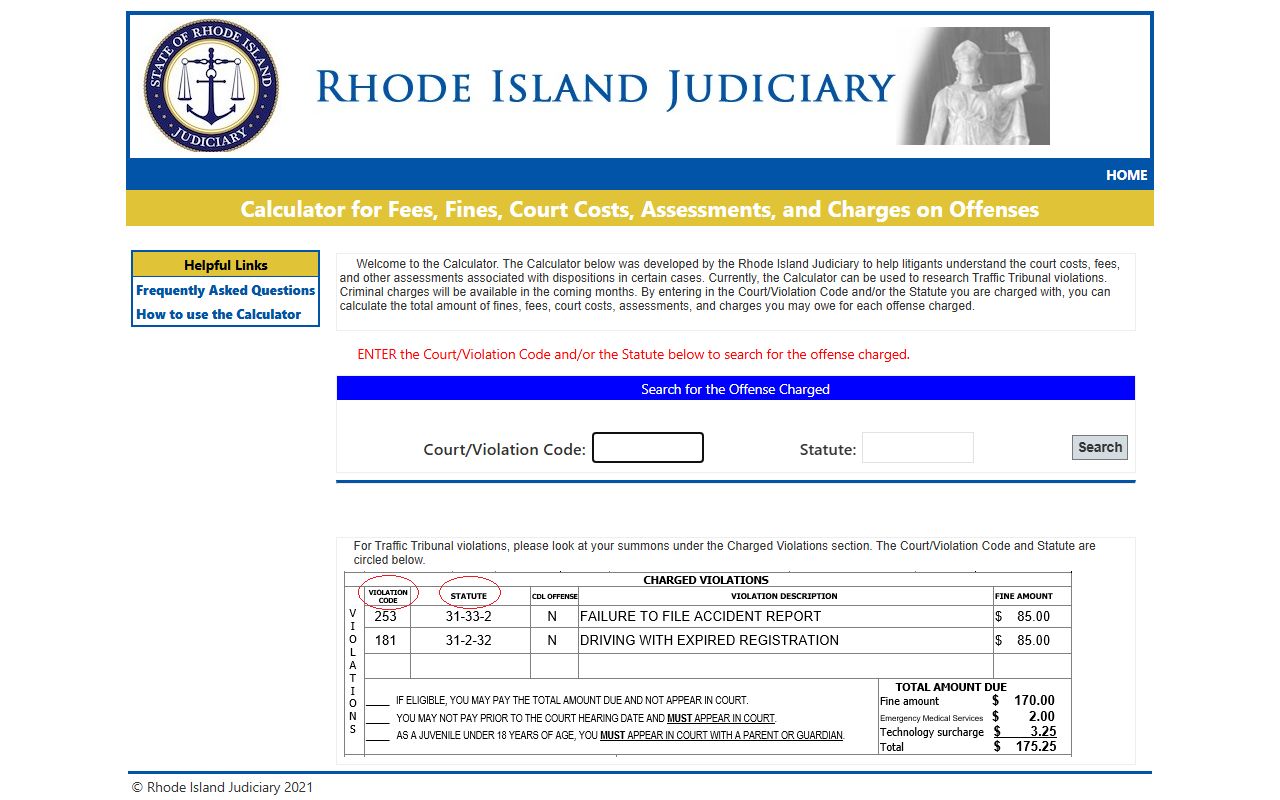
The Traffic Tribunal fine calculator above estimates the fine for a charged violation by code or statute.
Which Courts Handle Traffic Cases in Providence County
Most moving violations go to the Rhode Island Traffic Tribunal at 670 New London Avenue in Cranston. The Tribunal handles summons hearings, payments, document uploads, and ability-to-pay hearings. Some local ordinance, parking, and municipal violations go to a municipal court instead, depending on the citation.
The District Court Sixth Division handles administrative appeals, including appeals from Traffic Tribunal and DMV decisions. So a single traffic matter can touch the Tribunal, a municipal court, the District Court, and the DMV, depending on what happens.
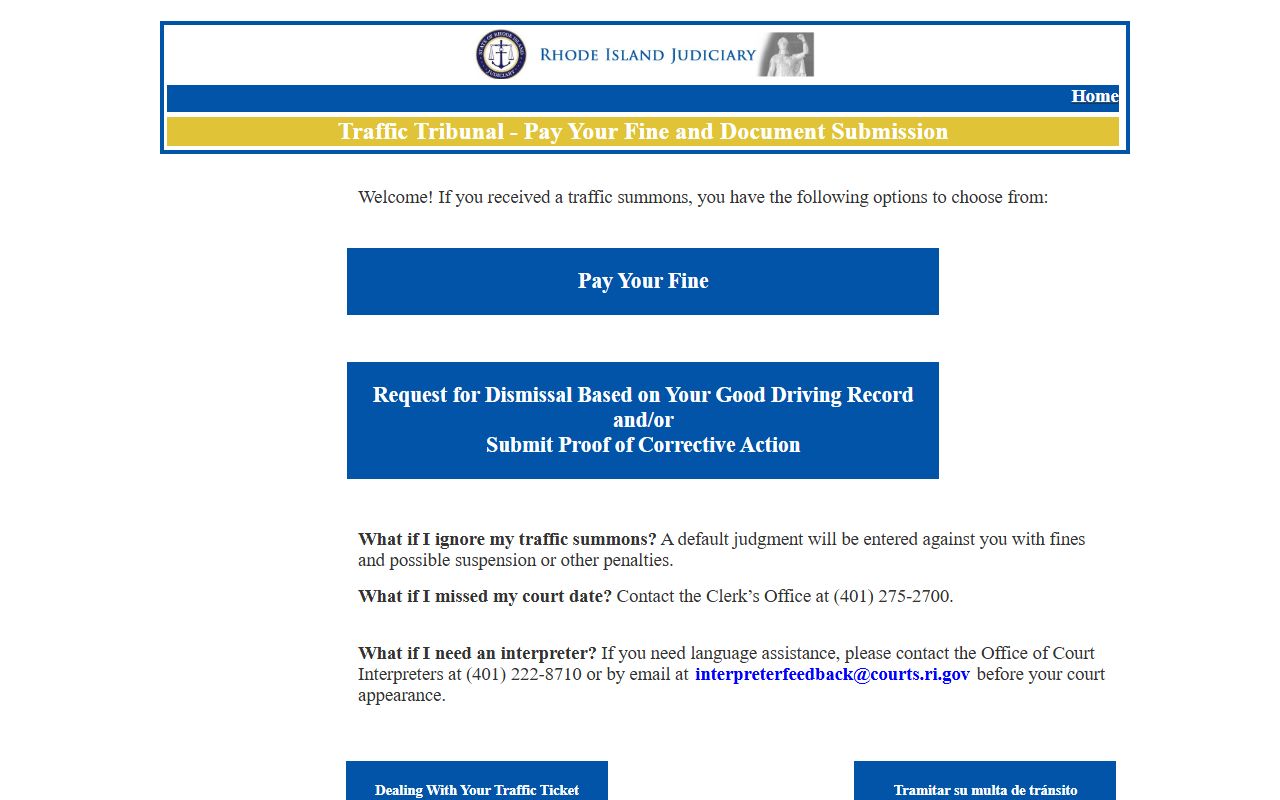
The Traffic Tribunal document portal lets a person pay a fine, request a good-driving dismissal, or submit proof of corrective action.
Types of Traffic Cases on Record
Traffic records cover a wide range. Most are civil violations handled by the Tribunal, but serious driving offenses can route to criminal court. The common types include the following.
- Moving violations like speeding and traffic-signal offenses.
- Equipment and registration violations.
- Parking and local ordinance citations through municipal courts.
- License and insurance-related violations.
- Serious offenses like DUI, which route to criminal court.
Because the Tribunal is statewide, a Providence County driver and a driver from another part of the state use the same court for most tickets.
What Providence County Traffic Court Records Show
A traffic record holds the details of the summons and the case. The inventory below lists the fields you usually find on a Rhode Island traffic record.
| Field | What It Shows |
|---|---|
| Summons / Ticket Number | The unique number for the citation. |
| Court/Violation Code | The code for the charged offense. |
| Statute Charged | The law the offense falls under. |
| Hearing Date and Court | When and where the case is heard. |
| Plea / Disposition | The plea and the case outcome. |
| Fine and Costs | The fine, court costs, and any surcharge. |
| License Consequence | Suspension or other action if unpaid or defaulted. |
If a summons is ignored, the record can show a default judgment with fines and a possible suspension.
Searching by Citation Number vs by Name
You can approach a traffic search two ways. The summons or ticket number is the fastest path, since it points to one case. A name search casts wider and may return more than one result. The Tribunal calculator uses the violation code, while a docket search on the portal uses name or case number.
Keep the summons handy. It carries the ticket number, the court, the violation code, the statute, and the hearing date, which are the keys to every next step. Without it, expect a slower search.
Paying or Contesting a Providence County Traffic Ticket
You have choices when you get a summons. You can pay, you can contest, or you may seek a good-driving-record dismissal. Read the summons first, since some cases require a court appearance. The steps below outline the path.
- Read the summons and note whether it requires a court appearance.
- Decide whether to pay, contest, or seek a dismissal.
- If paying online before a hearing, know it is a guilty plea that waives a hearing.
- If contesting, appear on the date, time, and court listed.
- If assessed a fine after a hearing, pay within 45 days to avoid suspension.
- If you cannot pay, call the Clerk's Office at (401) 275-2700 for an ability-to-pay hearing.
A missed court date should be addressed by calling the Clerk's Office right away, not by waiting. Ignoring a summons leads to a default judgment, with fines and a possible license suspension. So even if you plan to pay, do not let the date pass without action. Keep your payment receipt too, in case there is a later discrepancy.
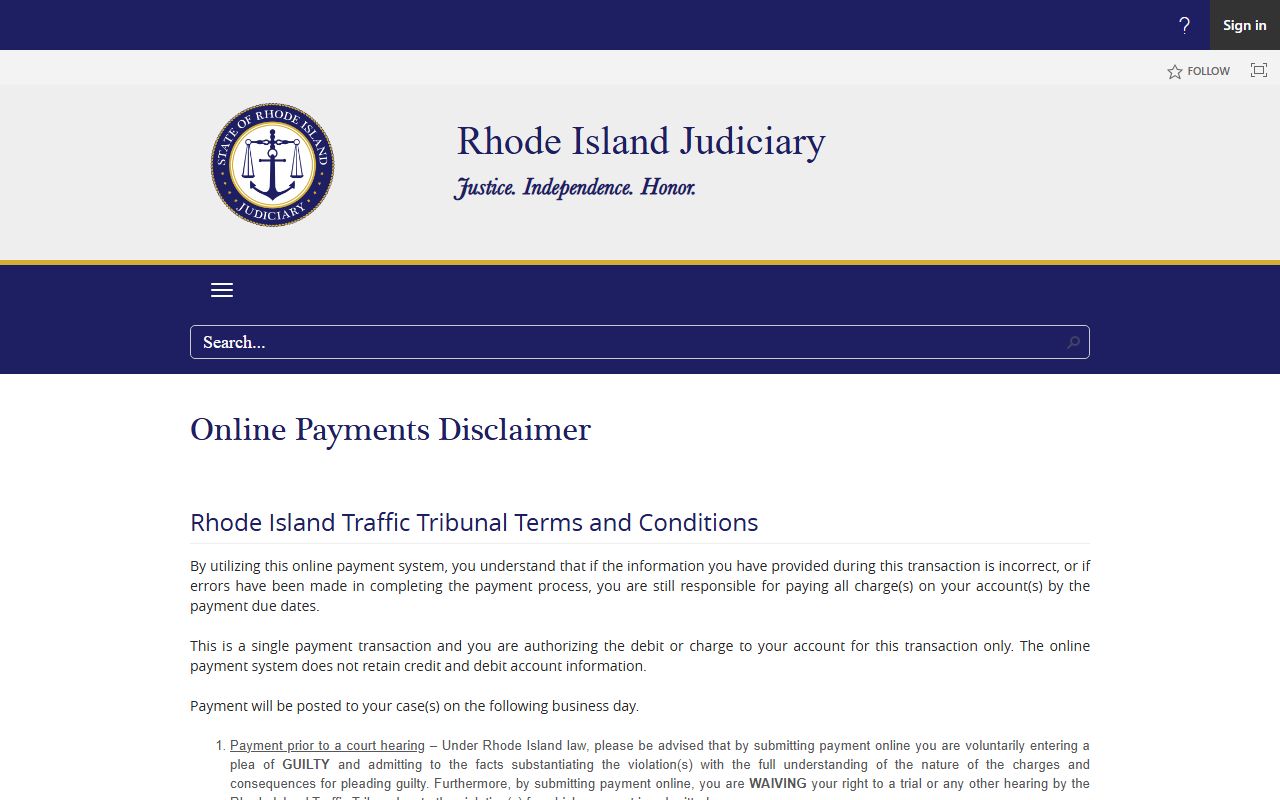
The online payment disclaimer explains that paying before a hearing is a guilty plea and waives the right to a hearing.
Public Access Laws for Traffic Court Records
Traffic court records follow the Judiciary's public access rules, like other court cases. The docket is reachable through the Public Portal, while documents may need a clerk or terminal. Paying online posts to the case the next business day, and the system does not keep your card details.
Online payment also carries legal weight. The disclaimer says a payment before a hearing is a voluntary guilty plea and waives the right to trial for that violation. Refund requests go in writing to the Supreme Court Finance Office, not the clerk.
Court Traffic Records vs State Driver Records
This is the split that confuses many drivers. The court traffic record and the DMV driver record are two different files, kept by two different agencies. You may need both, from two places.
| Point | Court Traffic Record | DMV Driver Record |
|---|---|---|
| Custodian | Traffic Tribunal or court | Rhode Island DMV |
| What it shows | Summons, charge, hearing, disposition, fines | License status, convictions, suspensions, history |
| Where to get it | Judiciary portal, Tribunal clerk | DMV online services or records channel |
| How to fix errors | Through the court | Through the DMV |
So a clean court outcome and a clean driving record are not automatically the same. Check both if either one matters. For a job, insurance, or a CDL, the DMV driver record is usually what matters, since it tracks convictions reported to the state. The court record shows the case itself, which is the place to fix an error in how a citation was handled.
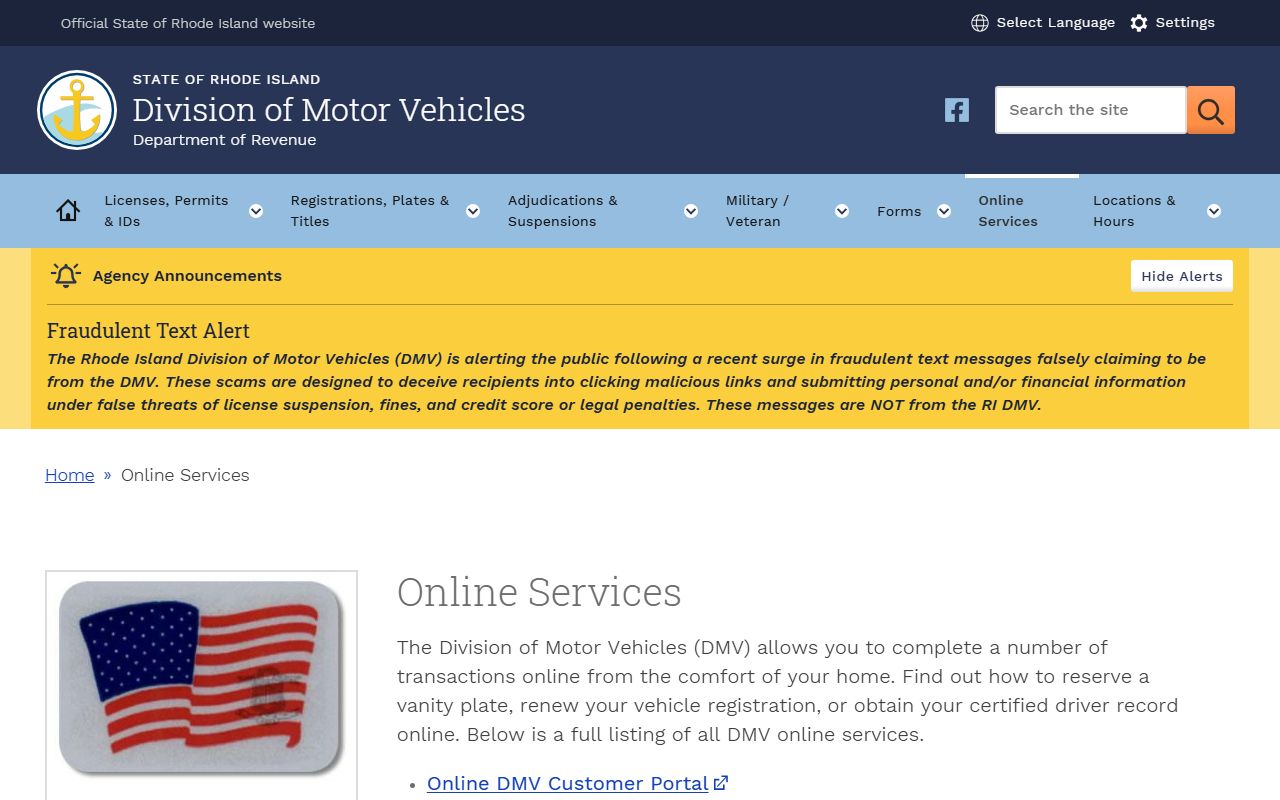
The DMV online services page is where a driver requests a certified driver record, separate from the court file.
CDL and Out-of-State Motorists
Commercial drivers face stricter rules. The Tribunal's Know Your Rights guidance says CDL holders cannot seek a dismissal under the good-driving-record statute. So a CDL holder has fewer options to clear a violation than a regular driver.
Out-of-state motorists who seek a good-driving-record dismissal must bring a certified copy of their home-state driving record to the first appearance. A Providence County resident with a Rhode Island license relies on RI DMV records, while an out-of-state driver needs their own state's certified record.
DUI and DWI Cases
Serious driving offenses are not simple traffic tickets. DUI, DWI, and similar charges can route to criminal court rather than the Traffic Tribunal. So those cases follow the criminal process, with arraignment, bail, and possible jail exposure.
For those matters, see the arrest records page, which covers arrest, charges, and the criminal court path. The line between a civil traffic violation and a criminal driving offense decides which court and which record applies.
Good Driving Record and Corrective Action
The Tribunal offers a dismissal path for eligible drivers. A good-driving-record dismissal requires a court appearance, and it is defined as no moving violations in the three years before the current one, with limits. Drivers can also submit proof of corrective action through the document portal.
There is a repeat-offense limit too. A driver who gets a third summons after two guilty adjudications within a twelve-month period cannot resolve the charge by mail and must appear in person. Parking summonses are exempt from that rule.
Sealing or Expunging Traffic Records
Civil traffic violations are handled differently from criminal records. A standard Traffic Tribunal violation is a civil matter, not a criminal conviction, so it does not follow the criminal expungement path. A criminal driving offense, like a DUI, is different and may be eligible for expungement under Rhode Island law if the conditions are met.
So the right path depends on the charge. For a criminal driving case, the expungement rules in R.I. Gen. Laws Chapter 12-1.3 may apply, with waiting periods. The arrest records page covers those steps. For a civil traffic record, ask the court what options exist for your specific case.
Fees for Traffic Record Copies and Appeals
Several set fees apply to traffic matters. Copy and record fees differ from court fines. The amounts below come from official Judiciary and DMV pages.
| Item | Amount |
|---|---|
| DMV Licensed Driver Record | $19.50 in person or by mail |
| Traffic Tribunal appeal filing fee | $45.00 |
| DMV appeal filing fee | $45.75 |
| Other administrative appeal fee | $100.75 |
Indigent filers may ask to proceed in forma pauperis, filed in person at the District Court civil counter for judicial approval.
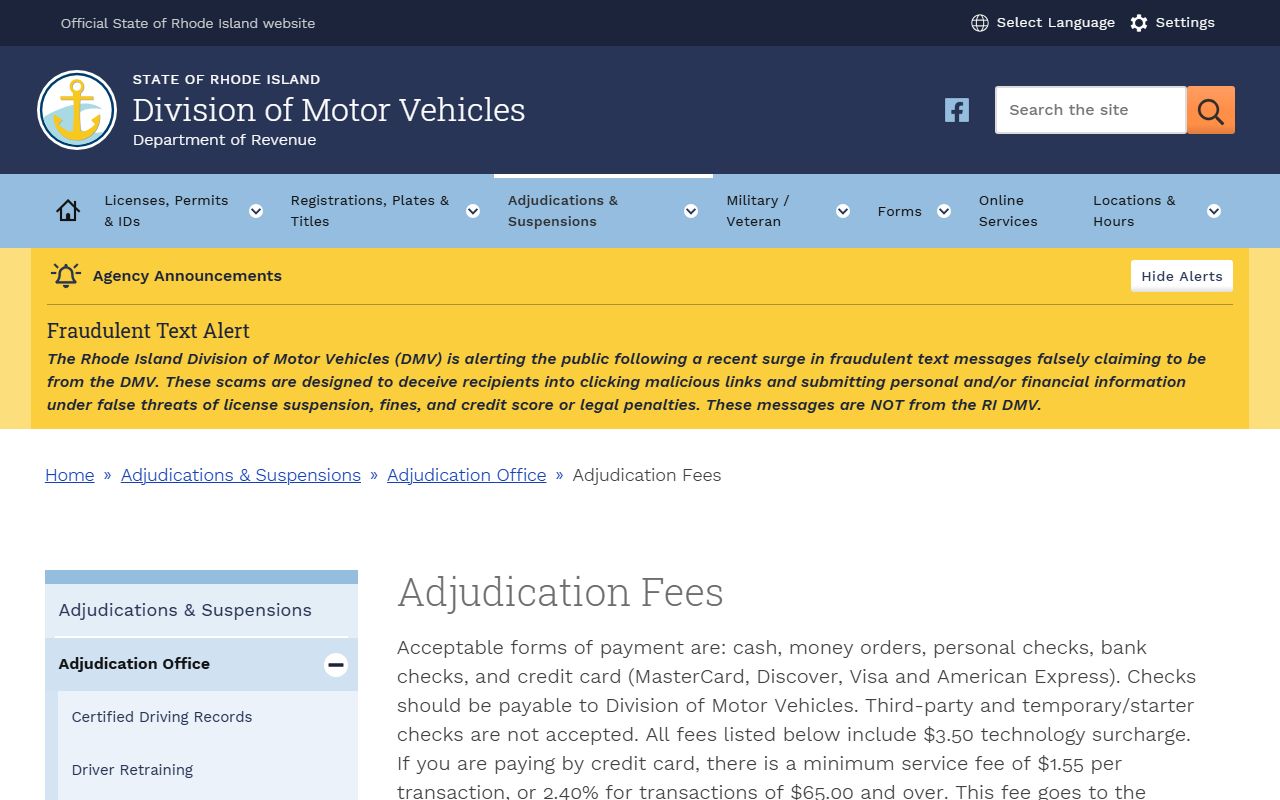
The DMV adjudication fees page lists the licensed driver record fee and related charges.