
About the Providence County Superior Court
The Superior Court is Rhode Island's general-jurisdiction trial court. For Providence County, it operates as the Providence/Bristol County Superior Court at the Licht Judicial Complex, 250 Benefit Street. It hears felony prosecutions, large civil cases, jury trials, and equitable matters like injunctions and certain restraining orders.
It also takes some appeals and matters that exceed the District Court limits. Above it sits the Rhode Island Supreme Court, the state's highest appeals court, which also sits at the Licht complex. So a single downtown building holds both the trial and appellate levels.
The name "Providence/Bristol County Superior Court" reflects how Rhode Island still labels some courts by county, even though county government has little power. The court serves the Providence County area from the Licht complex, and its clerk holds the Superior Court records for the region. That county label is mostly about geography and naming, not a separate county court system.
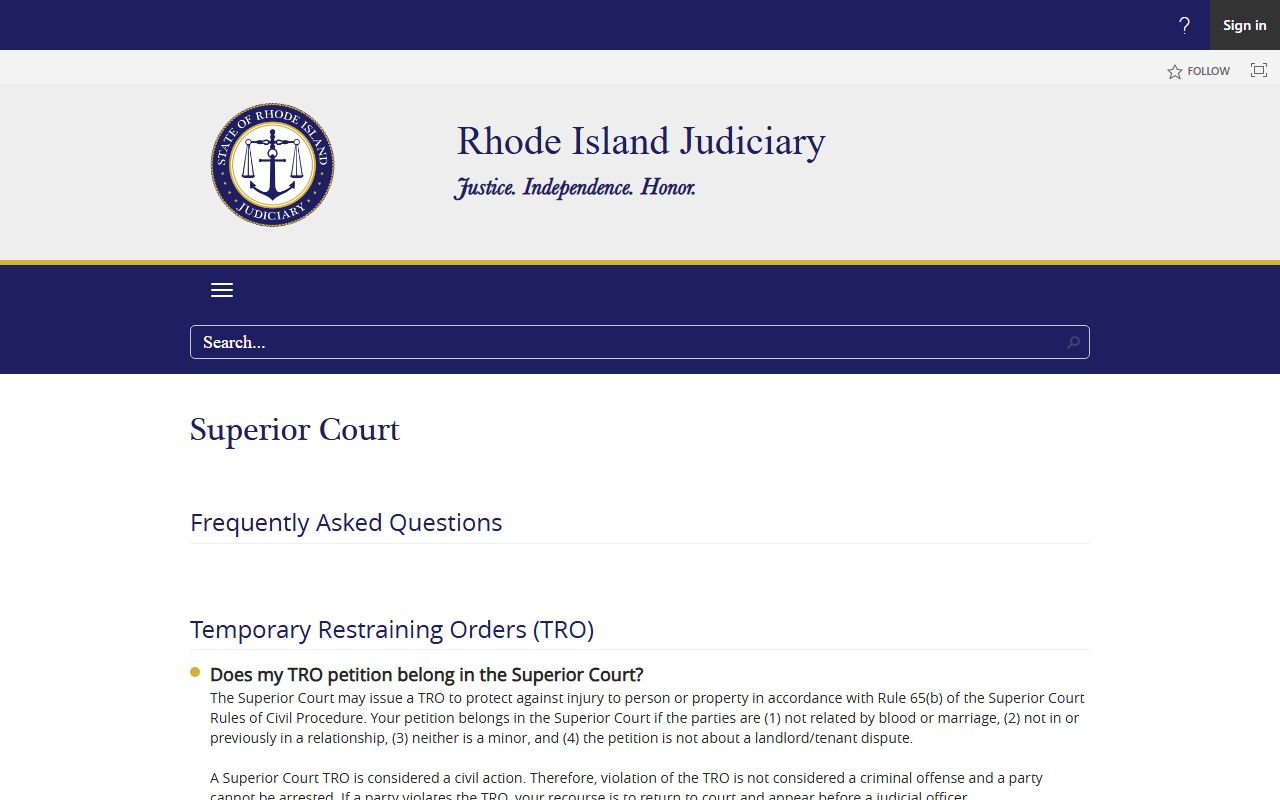
The Superior Court FAQ page above answers common questions on restraining orders, costs, and the expungement process.
Providence County Court Table
Rhode Island does not use numbered courts. Instead, a handful of state courts split the work by case type. The table lists the main Providence-area courts, where they sit, and what they handle.
| Court | Address | Jurisdiction |
|---|---|---|
| Rhode Island Supreme Court | 250 Benefit Street, Providence | Highest appeals court; sets court rules. |
| Superior Court (Providence/Bristol) | 250 Benefit Street, Providence | Felony, major civil, jury trials, TROs. |
| District Court Sixth Division | One Dorrance Plaza, Providence | Misdemeanors, arraignments, small claims. |
| Family Court (Providence County) | One Dorrance Plaza, Providence | Divorce, custody, support, juvenile. |
| Rhode Island Traffic Tribunal | 670 New London Avenue, Cranston | Traffic violations and fines. |
So a Providence County case can sit in any of these courts, depending on what it involves. The Workers' Compensation Court also operates from the Garrahy complex for job-injury claims. Because the courts cluster in two downtown buildings plus the Cranston Traffic Tribunal, the right address depends entirely on the case type, not a single county courthouse.
Superior Court vs District Court vs Family Court
The three trial courts handle different work. Knowing the split tells you where a case belongs and where its records live. The comparison sorts the main differences.
| Point | Superior Court | District Court | Family Court |
|---|---|---|---|
| Main cases | Felony, major civil | Misdemeanor, small claims | Divorce, custody, juvenile |
| Jury trials | Yes | No | No |
| Building | Licht | Garrahy | Garrahy |
The arrest records page covers the criminal side, and the marriage and divorce records page covers Family Court. The District Court also handles felony arraignments at the start, even though the felony itself moves to Superior Court. So the same case can touch two courts, which is why reading the docket and the court name on each entry matters.
How a Case Moves Through the System
A criminal case often starts lower and moves up. An arrest leads to a District Court arraignment, where charges and bail are set. A felony then moves to the Superior Court for prosecution and trial. An appeal goes to the Rhode Island Supreme Court.
Case flow: Arrest › District Court arraignment › Superior Court trial › Rhode Island Supreme Court
Civil cases follow a simpler path. A larger civil suit starts in Superior Court, while a small claim or landlord-tenant case starts in District Court. The court dockets page shows how each step appears on the docket.
Not every case climbs the ladder. Many District Court matters end there, with a plea, a dismissal, or a small judgment. The path up to Superior Court is mostly for felonies and larger disputes. So the court a case lands in tells you a lot about how serious it is.
What the Providence County Superior Court Handles
The Superior Court takes the heaviest cases in the system. On the criminal side, it handles felony prosecutions, pleas, sentencing, and probation-violation matters. On the civil side, it handles larger lawsuits, judgments, and equitable relief.
- Felony criminal cases after arraignment.
- Major civil suits above the District Court limit.
- Jury trials in both civil and criminal matters.
- Civil temporary restraining orders outside Family Court.
- Certain appeals from lower courts.
Because these cases are serious, many records are detailed, though sealed and confidential matters stay closed.
Reading a Superior Court Record
A Superior Court file can run long, since felony and major civil cases produce many filings. The docket lists each step in order, from the first complaint or indictment to the final judgment or sentence. Read it top to bottom to follow the case.
Watch the disposition line. In a criminal case, it shows whether the matter ended in a plea, a verdict, or a dismissal. In a civil case, it shows the judgment. A charge or a complaint is only the start, not the outcome, so do not read an early entry as a result. The court records page explains the standard docket fields in more detail.
For documents rather than the docket, plan a clerk visit or a terminal session. The remote portal shows the register of actions, but the filed motions, orders, and judgments often need a courthouse trip. A certified copy of a judgment or order comes from the clerk, with the court seal that legal use requires.
Appeals to the Rhode Island Supreme Court
The Rhode Island Supreme Court is the top of the state system. It hears appeals and sets the rules that govern the lower courts, including the public access rules for case records. It sits at the Licht complex, with its clerk's office on the seventh floor.
An appeal does not retry the facts. It reviews how the law was applied in the trial court. So a Superior Court judgment can be challenged on appeal, but the Supreme Court is not a second trial. Federal matters take a different path entirely, through the federal courts rather than the state Supreme Court.
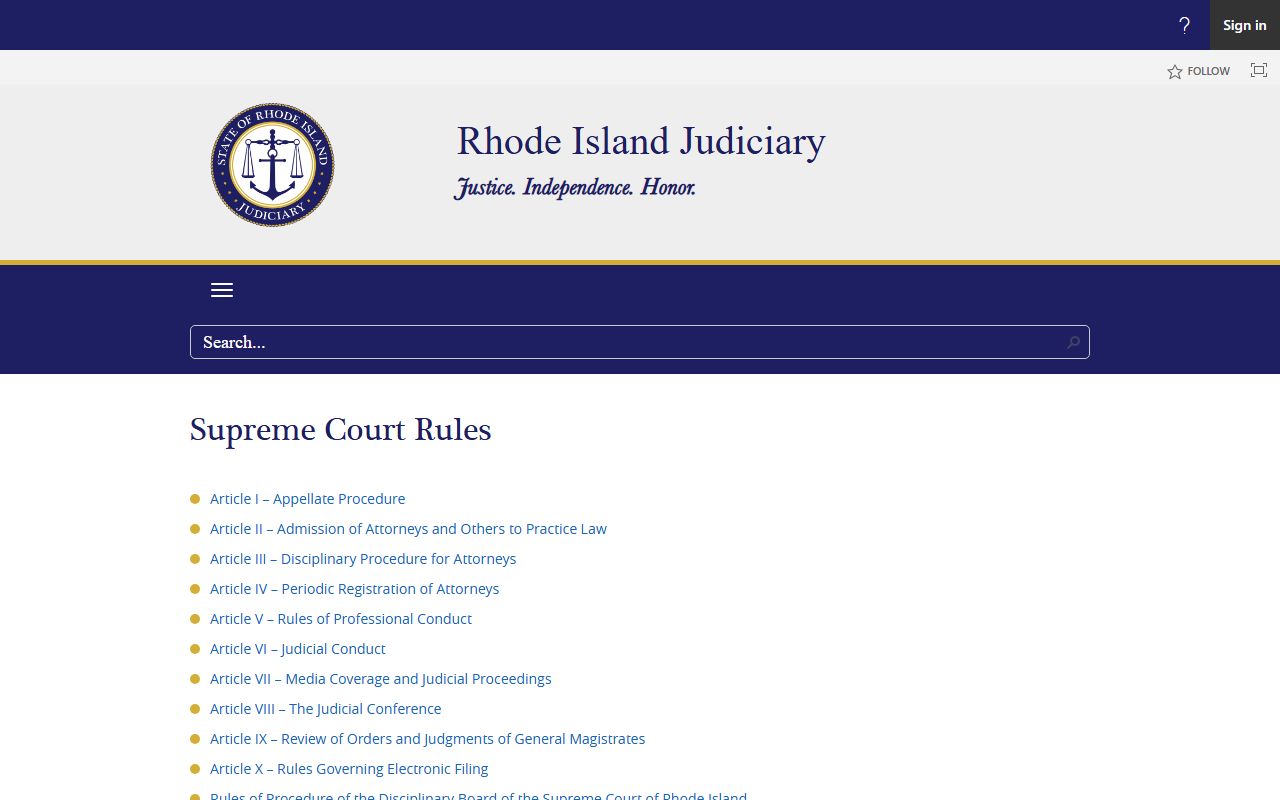
The Supreme Court rules index covers the public access rules that shape what court records the public can see.
Filing and Clerk Contacts
The Superior Court Providence/Bristol County Clerk's Office is on the fifth floor of the Licht complex. Use it for filings, records, and copies. eFiling runs through eFileRI, though self-represented litigants are not required to use it.
Superior Court Clerk (Providence/Bristol)
250 Benefit Street, 5th Floor
Providence, RI 02903
(401) 222-3230
General: (401) 222-3250
The Clerk of Court page explains the certified-copy request and remote access registration. The complex also holds other Superior Court offices, like the Arbitration Office and the Jury Commissioner, each on its own floor. When you call, ask for the office that matches your need so you reach the right counter the first time.
Superior Court Diversion Program
The Superior Court runs a Diversion Program as an alternative to a standard conviction and sentence. The program page describes supervision and services instead of incarceration for eligible defendants, with the goal of reducing repeat offenses. The Providence contact is at the Licht complex, Room 618.
This is one of several specialty paths in Rhode Island, along with the Attorney General's Adult Drug Court and Veteran's Court. Eligibility rules are set by each program, so confirm them on the official page before assuming a case fits. These programs aim to cut repeat offenses by mixing supervision and treatment with court oversight, rather than a plain conviction and sentence.
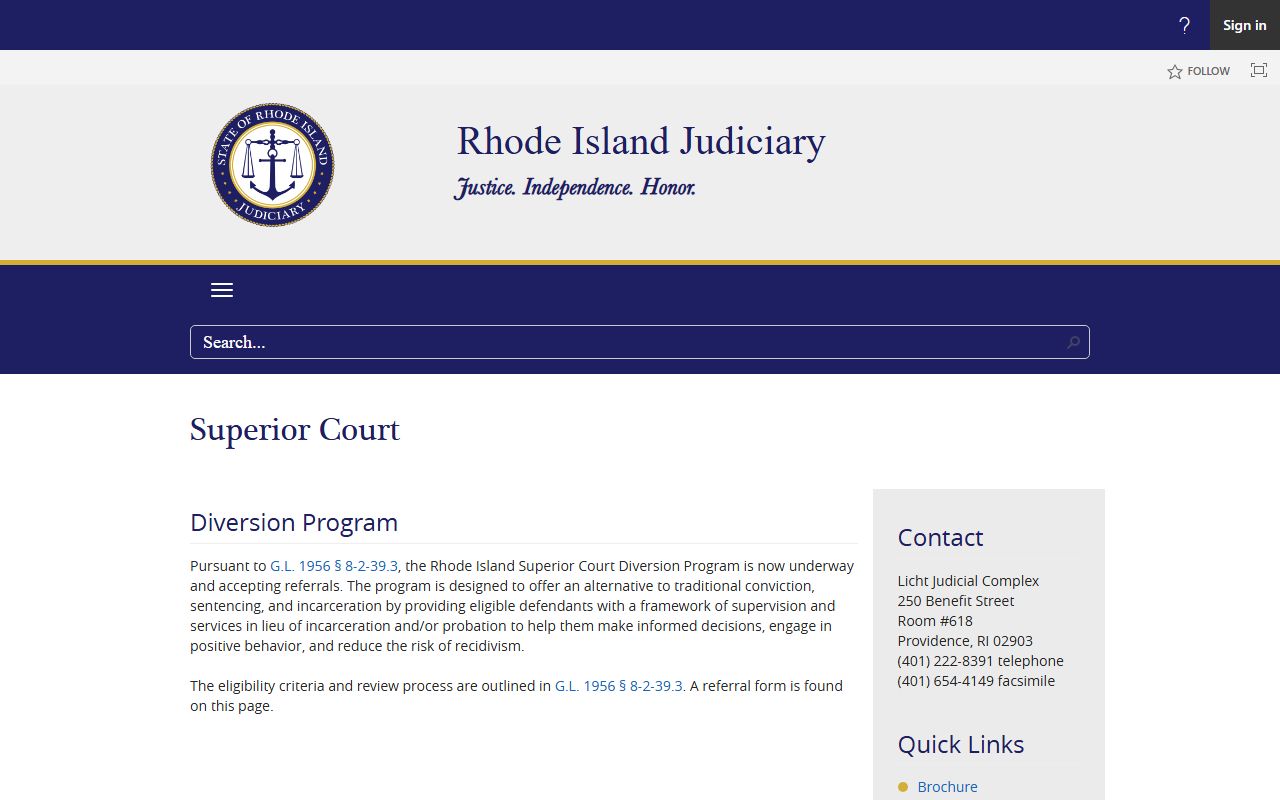
The Diversion Program page lists the statutory basis, eligibility reference, and the Providence contact noted above.
Courthouse Location and Access
The Licht Judicial Complex is at 250 Benefit Street on the east side of downtown Providence. The accessible route is the South Main Street entrance. Street parking is limited, and nearby garages charge varying fees, so plan ahead.
Note: Expect security screening at entry, and request ADA accommodations early through ADA@courts.ri.gov or (401) 615-2469.
The home page has full directions, parking, and transit details for the Licht complex. Leave extra time on a court day, since downtown parking and the entry line can add up. Both Licht and Garrahy sit close to Kennedy Plaza, so RIPTA bus service is a practical option when parking is tight.