
How to Find Providence County Marriage and Divorce Records
The split matters from the start. Marriage licenses are a city or town function. Divorce is a Family Court matter. Vital records, like a certified marriage certificate, run through the Rhode Island Department of Health and local clerks, and they are confidential.
So your path depends on the record. To marry, go to a city or town clerk. To find a divorce case, use the Family Court at the Garrahy Judicial Complex. To get a certified vital record, you must be an eligible requester under state rules.
This catches many people off guard. They search for a "Providence County marriage record office" and find none, because the work is municipal and state, not county. Knowing that up front sends you to the right counter the first time, whether that is a town hall, the Family Court, or the Department of Health.
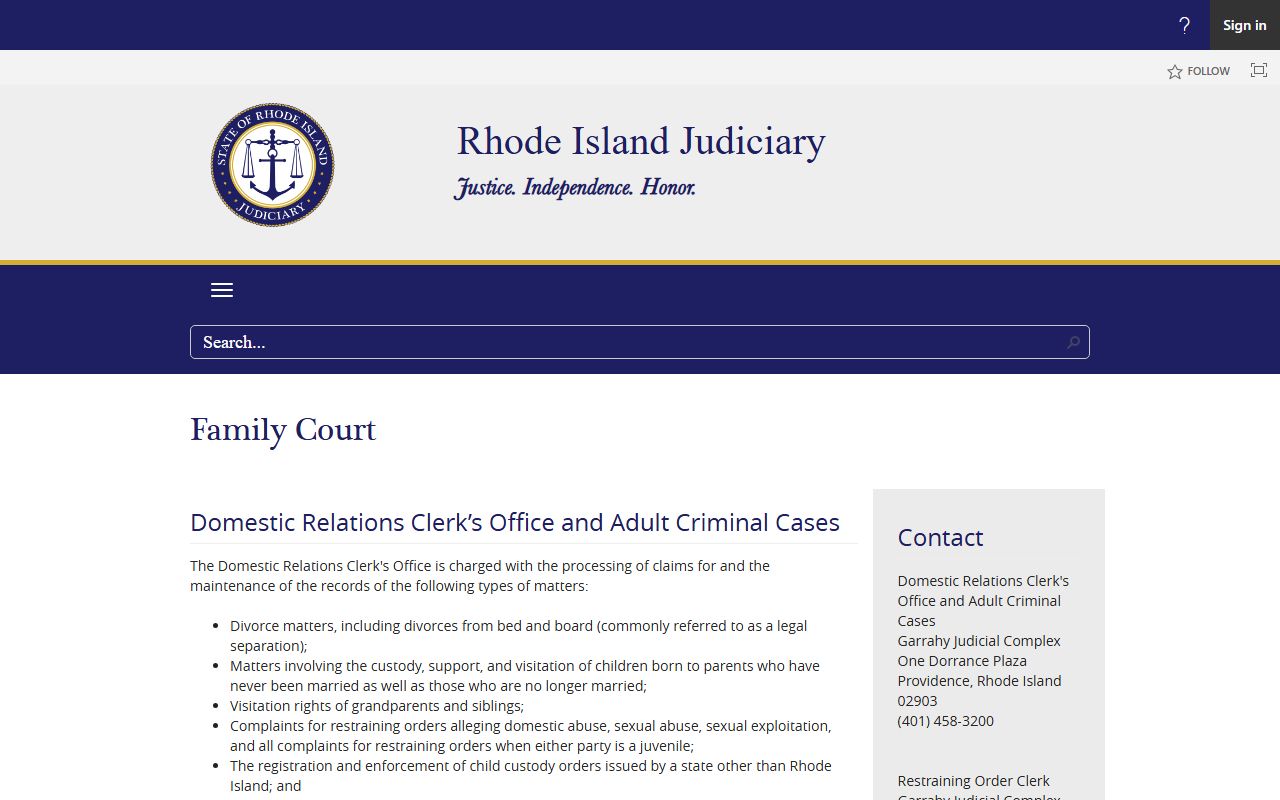
The Family Court domestic relations page handles divorce, custody, support, and related Providence County filings.
Getting a Providence County Marriage License
Marriage licenses come from city and town clerks, not a county clerk. The Department of Health marriage license page sets the residency rule. If both people live in Rhode Island, apply where either one lives. If only one lives in Rhode Island, apply where that person lives. If neither lives in the state, apply where the ceremony will happen. Same-sex marriage is legal, and the state no longer offers civil unions.
- Confirm which city or town clerk handles your application under the residency rule.
- Gather a certified birth certificate, valid photo ID, and proof of residency.
- If either person was married before, bring proof it legally ended.
- Both people must appear together to apply.
- Pay the license fee by check or money order.
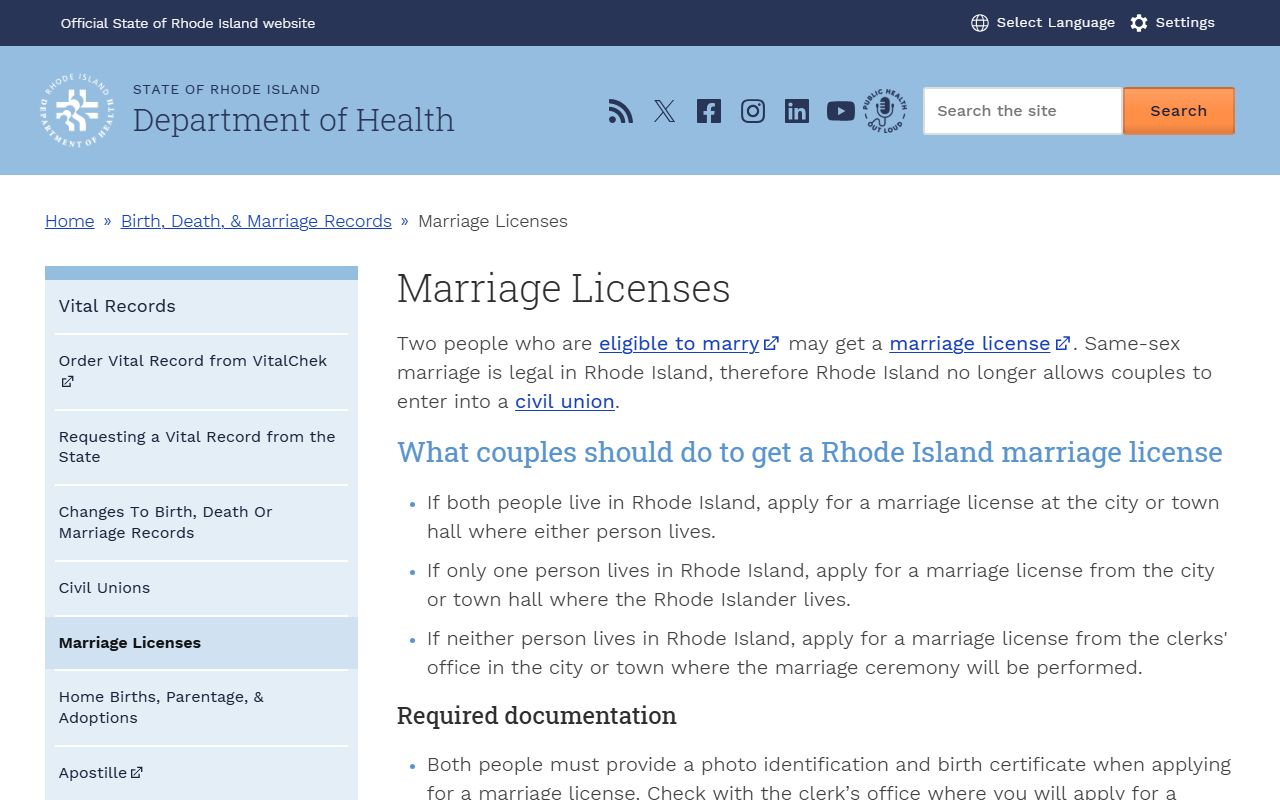
The Department of Health page above lists the residency rules and the documents each applicant must bring.
Marriage License Requirements in Providence
Providence adds specific document rules through its city requirements. Bring originals, not photocopies, and have any non-English document translated and notarized. The table sums up what to bring.
| Requirement | Notes |
|---|---|
| Both parties present | Both people must appear to apply. |
| Certified birth certificate | Original with parents' names; no photocopies. |
| Valid photo ID | Required for each applicant. |
| Proof of residency | Utility bill, bank statement, registration, tax return, or pay stub. |
| Prior marriage proof | Certified final divorce decree or death certificate. |
| Translation | Non-English documents need certified translation plus originals. |
Providence lists application hours of 8:30 AM to 3:00 PM. Confirm the current hours with the clerk before you go. Plan for the trip to take time, since both people must appear and staff check each document. If a birth certificate or a prior-divorce decree is missing, the clerk can turn you away, so gather everything first.
Marriage License Fees
The Providence marriage license fee is set and paid at the clerk's office. Cash is not accepted, so plan to bring a check or money order.
| Item | Amount |
|---|---|
| Providence marriage license | $24 |
| Accepted payment | Check or money order; no cash |
| Certified vital record copy | Fee set by the issuing office |
Fees can differ in other Providence County cities and towns, so confirm with the clerk that will issue your license. The license is also time-limited once issued, so do not apply far ahead of the ceremony without checking how long it stays valid.
Certified Vital Records and Confidentiality
Vital records are not open to anyone who asks. The Department of Health vital records page says birth, death, and marriage records are confidential. They go only to listed eligible requesters. That list includes the registrant if an adult, a spouse or legal partner, a parent, a child, a sibling or legal guardian with papers, attorneys and title examiners, genealogical societies, funeral directors, and people with a court order.
So a stranger cannot pull a recent certified marriage record. If you are eligible, you request it through the Department of Health or the city or town that holds it. See the public records page for how vital records differ from open agency records.
Adoption adds another layer. Rhode Island law gives special treatment to adoption-related birth records, and adult adoptees may access certain original records under set conditions. Those rules sit in the state vital records statutes, separate from ordinary marriage and divorce records. When adoption is part of the picture, expect tighter, statute-driven access rules.
Historical Marriage Records
Older records open up over time. The Rhode Island State Archives holds open historical vital records transferred from the Department of Health. Birth and marriage records more than 101 years old are open, and death records more than 51 years old are open.
So genealogy and history research often runs through the State Archives, not the modern confidential system. For a recent marriage, use the Department of Health rules instead. The cutoff is firm, so a record from the early 1900s may be open while a record from a few decades ago is still confidential. Check the date against the open-record window before you assume a record is public.
Providence County Divorce Records
Divorces are Family Court cases. The Providence County Family Court Domestic Relations Clerk's Office is at the Garrahy Judicial Complex, One Dorrance Plaza, with a phone line of (401) 458-3200. The office handles divorce, divorce from bed and board, custody, support, visitation, and certain restraining orders.
Office hours are generally 8:30 AM to 4:00 PM on court-open days, with earlier limits for some restraining-order matters. To find a divorce case, search the court docket on the Public Portal. The court records page explains the portal, and many divorce details stay limited because of privacy and children.
A final divorce decree is the document many people need later, for a name change, a benefits claim, or a new marriage license. That decree is a certified court record, so you request a certified copy from the Family Court clerk. A docket printout is not a certified decree. The Clerk of Court page covers the certified-copy request.
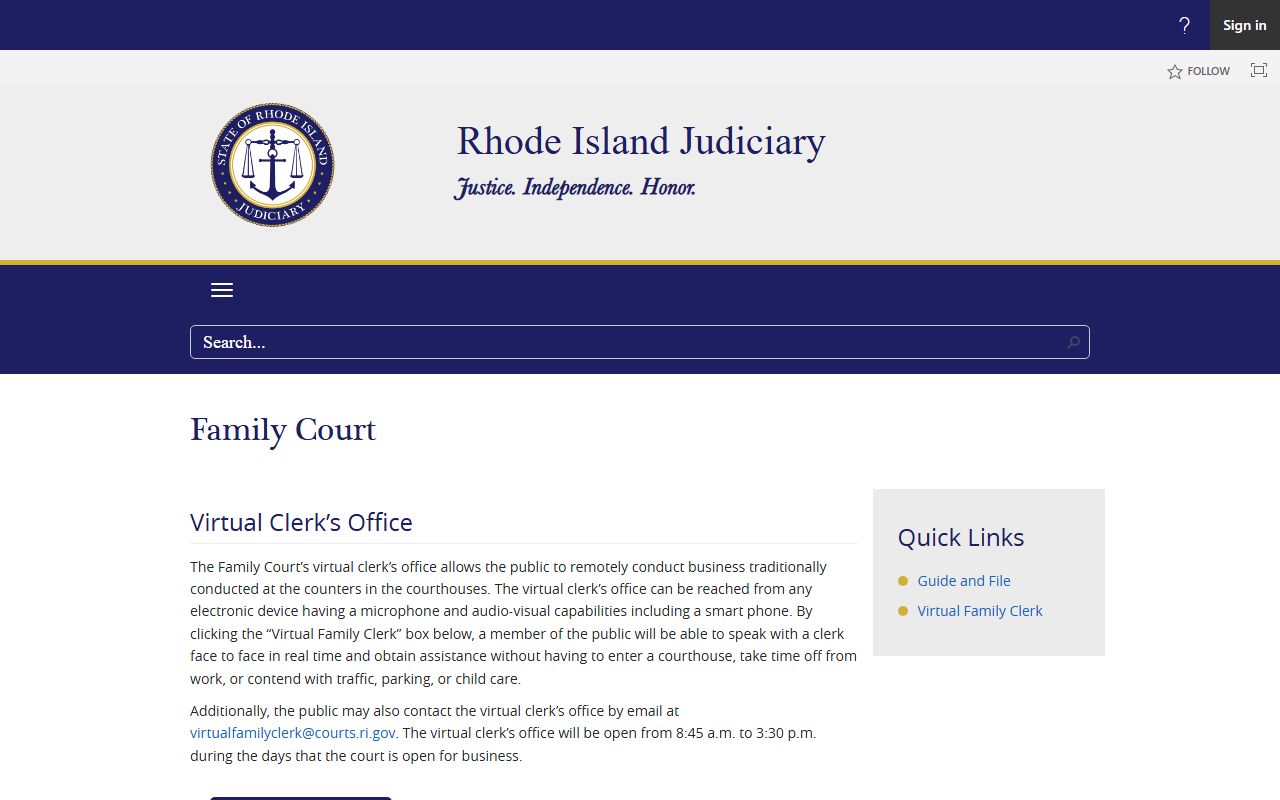
The Family Court page above covers virtual hearings and divorce finalization steps for Providence County cases.
The Divorce Complaint Form
A Rhode Island divorce starts with a Complaint for Divorce or Divorce from Bed and Board. The official Family Court form asks for a set of standard details. The inventory below shows the common fields.
| Field | What It Asks |
|---|---|
| County and parties | County, plus plaintiff and defendant names and addresses. |
| Representation | Attorney or self-represented information. |
| Marriage details | Date and place of the marriage. |
| Residency / jurisdiction | Allegations that the court has authority. |
| Minor children | Whether the couple has minor children. |
| Grounds and relief | Grounds and what the filer asks the court to order. |
| Verification | Signature and notary or verification section. |
Self-represented filers may file without eFiling, since the Judiciary does not require it of them. The clerk can hand out the forms and explain the steps, but staff cannot give legal advice or fill the form out for you. For help with the substance, legal aid or a family-law attorney is the right resource.
Custody and Support Records
Family Court also handles custody, support, and visitation. These often ride along with a divorce, but they can be separate cases too. The Domestic Relations Clerk processes these filings, and the Child Support and Collections Department handles support enforcement.
Because these cases involve children and finances, the public view is limited. A docket may show the case while keeping personal data private. For juvenile and child welfare matters, access is even tighter.
Support orders can also run for years and change over time. A modification reopens parts of the case, so the record can grow long after the divorce. If you need a current support order, ask the clerk for the latest certified version rather than relying on an older copy.
Confidential Family Records
Family files carry the most privacy limits of any court records. Children, abuse allegations, medical and financial details, and sealed orders can all restrict access. Juvenile matters, adoption files, and DCYF cases are closed to the general public.
Note: A public family docket may show that a case exists while keeping the filed documents and personal details out of public view.