
RIDOC Release Information for Providence County
Start with the state. The Rhode Island Department of Corrections runs the public incarceration search, which is the first source for state release status. The RIDOC inmate search shows certain custody information as a voluntary service. Its disclaimer is clear that it is not the official record and that staff will not confirm case content by phone.
So a release shown there is a strong signal, not a guarantee. For an official confirmation of a Providence County release, contact RIDOC Records and ID at (401) 462-3900. The inmate records page covers the search tool in full.
There is no separate Providence County release list. Because the county does not run a jail, there is no county roster that flips someone from "in custody" to "released." Everything flows through the state system in Cranston. That keeps the search simple, but it also means you check state and federal tools, not a local page.
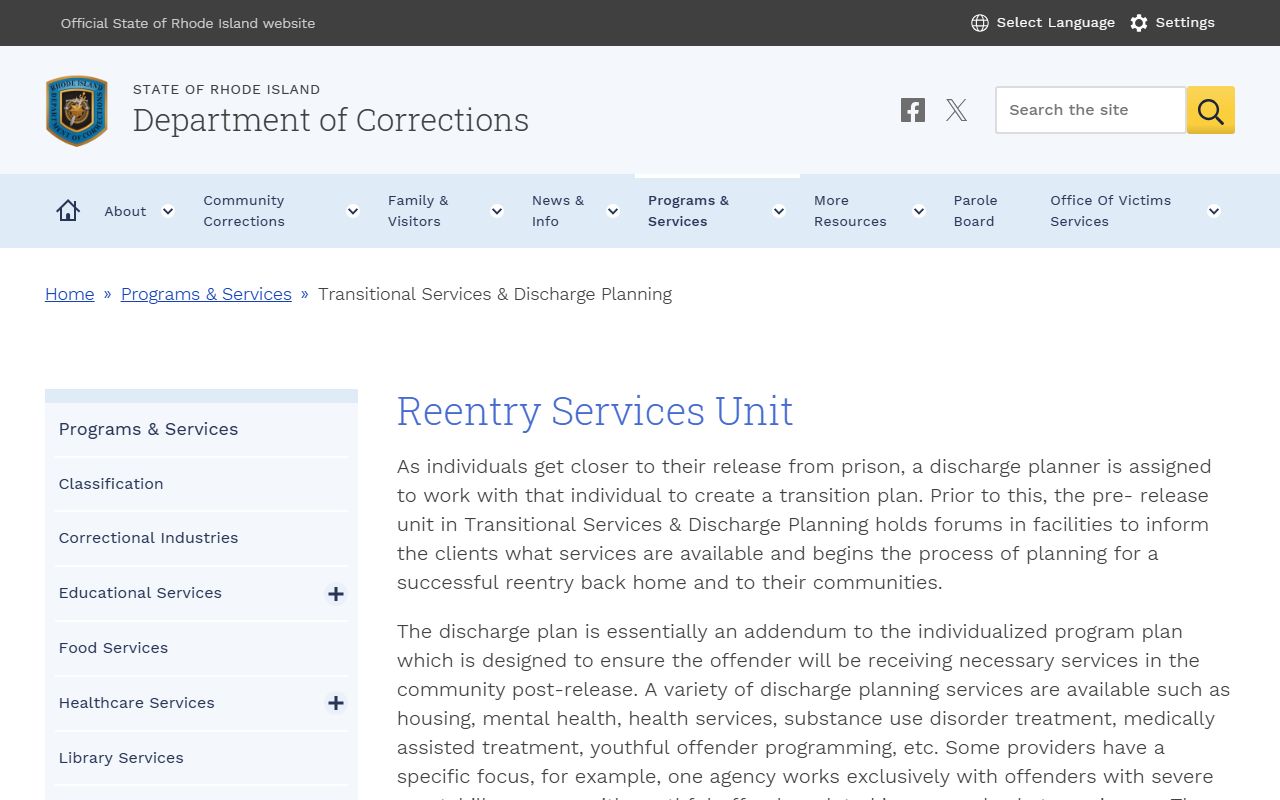
RIDOC's transitional services and discharge planning page, shown above, is the official hub for the reentry side of a release.
Setting Up Release Notifications With VINELink
If you want an alert when custody status changes, use VINELink. The VINELink system is the national victim notification platform, and it can send notices where Rhode Island custody data is in the VINE network. You register a phone, email, or text contact and a PIN, then get a notice on a release or transfer.
| Field Label | Type | Required | Notes / Format |
|---|---|---|---|
| State Selection | Dropdown | Yes | Choose Rhode Island to search state custody. |
| Offender Name / ID | Text | Yes | Search by name or offender ID. |
| Notification Contact | Phone / Email / Text | Yes | Where alerts are sent. |
| PIN / Password | Text | Yes | Used to confirm and stop alerts. |
| Language | Dropdown | No | Notification language options. |
VINELink is built for victims, but the public can use it for notifications too. The value is the alert. Instead of checking a search every day, you register once and let the system tell you when status changes. Keep your PIN somewhere safe, since you need it to update or stop the alerts.
Note: not every RIDOC status appears in VINE, so confirm a release through official custody sources before you rely on it.
Searching Federal Released Inmates
Federal releases use a different tool. The Federal Bureau of Prisons locator covers people in federal custody. A person sentenced in federal court from Rhode Island may serve time out of state and will not appear in RIDOC. The BOP locator offers two search paths, by number and by name.
| Field Label | Type | Required | Notes / Format |
|---|---|---|---|
| BOP Register Number | Text | Conditional | Find By Number; also DCDC, FBI, or INS number. |
| First / Last Name | Text | Conditional | Find By Name path. |
| Race | Dropdown | No | Optional name-search filter. |
| Sex | Dropdown | No | Optional name-search filter. |
| Age | Text | No | Optional name-search filter. |
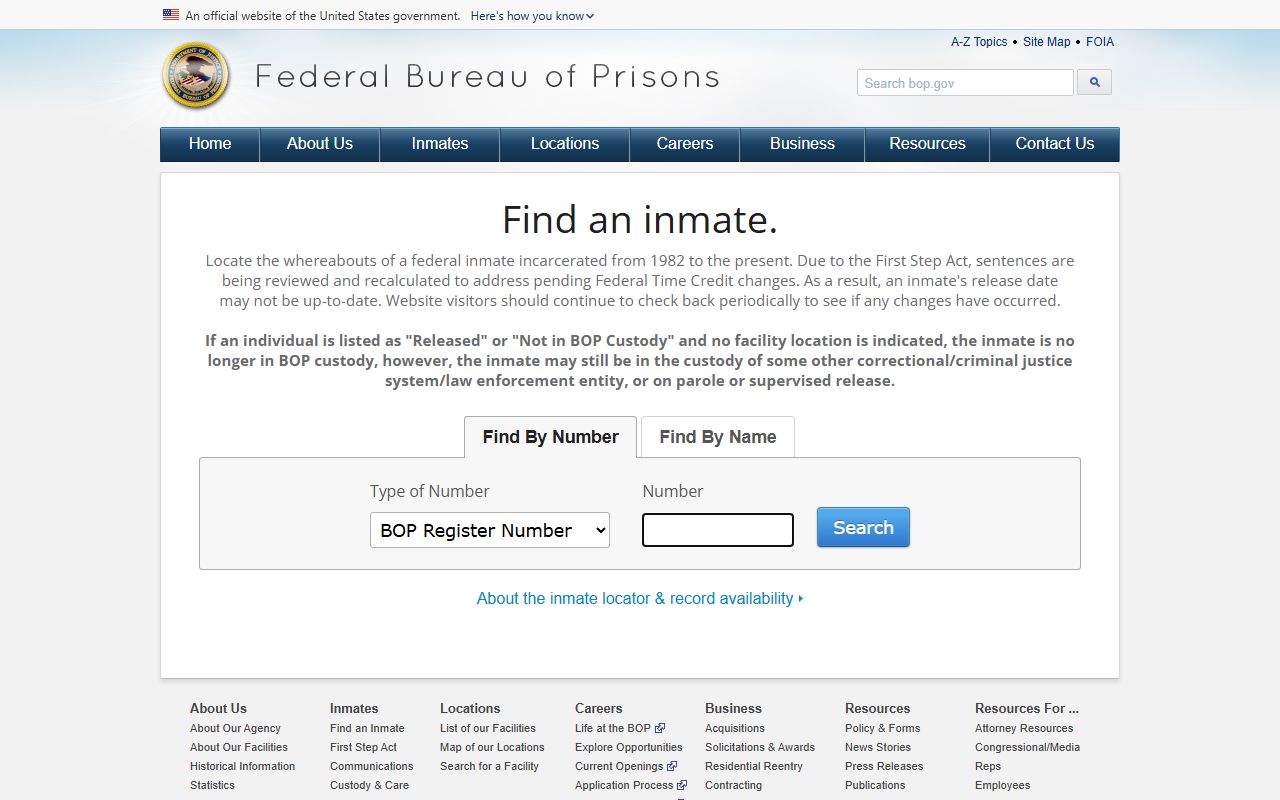
The BOP locator shown here is the federal counterpart to the RIDOC search for state custody.
Keep the systems straight. A Providence arrest on state charges leads to RIDOC. A federal charge or sentence leads to the BOP. If you cannot find a person in one, try the other. The federal locator also shows release dates for people in BOP custody, which the state tool does not cover.
Verifying a Release in Person or by Phone
Online tools are convenient, but they can lag. For a date that matters, confirm by phone. RIDOC Records and ID at (401) 462-3900 is the official contact for state custody and release questions. The general RIDOC line is (401) 462-1000.
If a person is leaving custody, ask about the discharge plan too. Release timing can shift, so do not lock in transportation or housing plans on a search result alone. A short call avoids a wasted trip to Cranston.
Be ready with details when you call. A full legal name and a RIDOC ID number help staff find the right person fast. Keep in mind that staff confirm custody facts, not case content, and they cannot give legal advice about the underlying charges.
The Rhode Island Sex Offender Registry
A release can trigger registration if the offense requires it. The Rhode Island sex offender community notification page, run by the Parole Board, is the official resource. It is not a general release list. It exists for public safety notification about registered offenders.
| Field Label | Type | Required | Notes / Format |
|---|---|---|---|
| Name Search | Text | Conditional | Search a registered person by name. |
| Location / Area | Text / Map | No | Browse by area where offered. |
| Offender Profile | Result | n/a | Profile fields vary by registry level. |
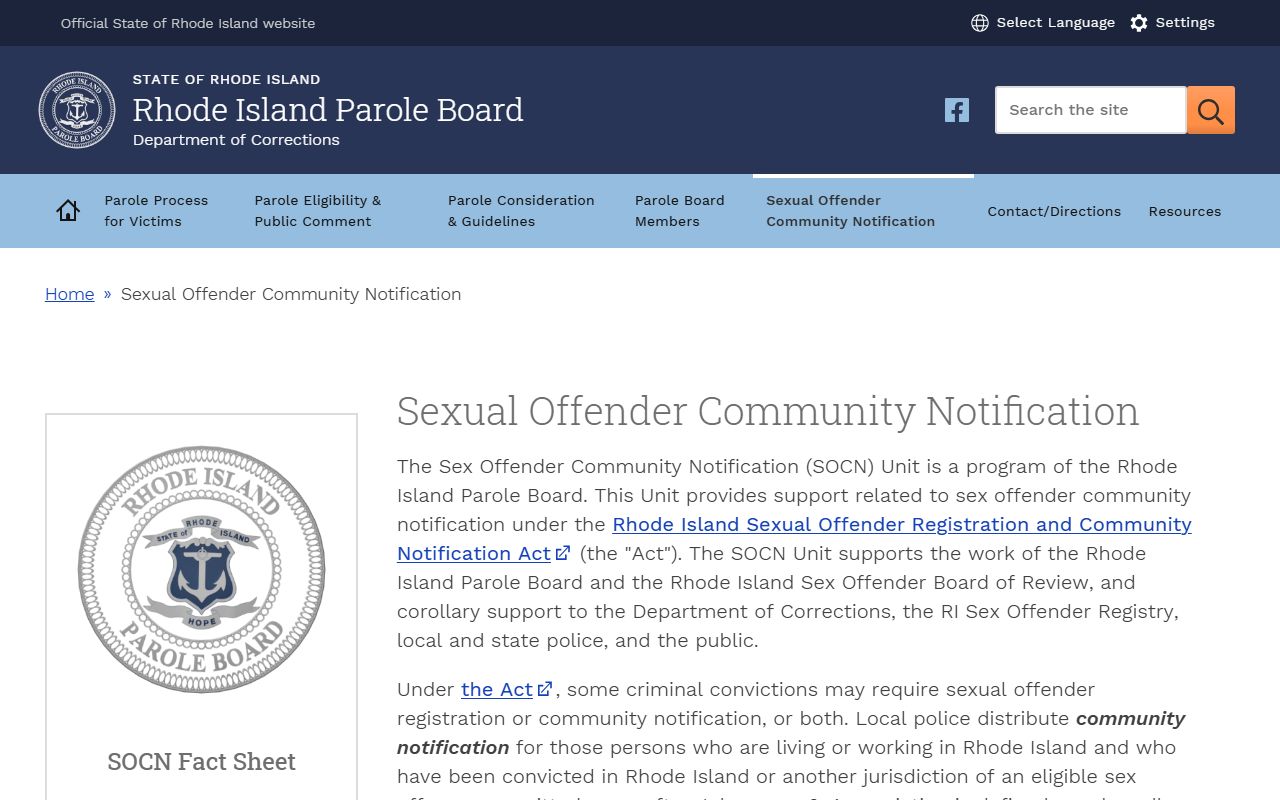
The Parole Board community notification page is the official registry resource referenced above.
Be careful with what the registry means. Registry presence reflects an obligation tied to a past offense. It is not a general list of everyone recently released. Many released people have no registration duty at all. So do not treat the registry as a release tracker. Use RIDOC and VINE for release status, and the registry only for its specific public-safety purpose.
How Providence County Release Records Update
Release data does not always post the moment someone walks out. The RIDOC search updates on its own schedule, and a transfer to federal custody can change where a person shows. So a search can lag reality by hours or more.
That lag is the main reason to pair a search with a notification. VINE pushes an alert when status changes, which beats refreshing a page. For an exact date, the phone confirmation through Records and ID is the most reliable step. Use all three together when the timing truly matters.
Is the online search the official release record? No. RIDOC states plainly that the search is informational and not the official record. Only Records and ID, or the court file, gives an official answer.
Parole and Community Corrections
Many people leave the ACI under supervision rather than a clean discharge. Parole and probation are handled through RIDOC Community Corrections and the Rhode Island Parole Board. Supervision sets conditions a person must follow after release, and a violation can return them to custody.
If you are checking on a parole or probation status, the official RIDOC and Parole Board channels are the right place. A court docket can also show probation-violation filings. The court dockets page explains how those events appear.
Supervision is why a release is not always the end of a case. A person out on parole can be ordered back to custody for a violation. So a search may show someone released, then back in custody weeks later. If timing matters, set a VINE alert and check the docket for violation entries.
Reentry Resources in Providence County
Reentry support helps a released person find housing, work, and services. RIDOC Transitional Services and Discharge Planning is the primary official source. Local groups add legal and social help.
- Rhode Island Legal Services for civil legal aid in Providence.
- The Rhode Island Office of the Public Defender for sealing and expungement guidance.
- The Attorney General's expungement resource for eligibility questions.
- Community groups in Providence for housing, food, and employment help.
Driver's license reinstatement runs through the Rhode Island DMV and is separate from a court or DOC release. A suspension tied to an old fine or a traffic matter does not clear just because a sentence ended, so check the DMV and the court before you assume you can drive.
Start reentry steps early, even before the release date. Lining up an ID, a place to stay, and a contact for legal aid in advance smooths the first weeks out. RIDOC discharge planning exists to help with that handoff, so ask about it while the person is still in custody.
Voting, ID, and Civil Rights After Release
Rhode Island restores voting rights for people who are not currently incarcerated for a felony. So many people who are released can register and vote. Because rules can change, confirm current guidance with the Rhode Island Board of Elections before an election.
A state ID, a Social Security card, and a driver's license are common reentry needs. Each runs through its own agency, not the court. Plan these early, since some require documents that take time to gather.
Voting is one of the clearer wins. A person who is out of prison can take part in elections under current Rhode Island rules. If a released person wants to vote, the next step is to register, then check the deadlines for the coming election with the Board of Elections.
Expungement After Release
Once a sentence is complete and the waiting period passes, expungement may be an option. Rhode Island sets the rules in R.I. Gen. Laws Chapter 12-1.3. Eligible misdemeanor first offenders may file after five years, and eligible felony first offenders after ten years. Crimes of violence and some offenses do not qualify.
Note: Expungement removes a record from active public files, but it does not erase it for every legal purpose, so review the statute before you rely on it.
The arrest records page lays out the expungement steps and the notice requirements in detail. A clean public record can ease the search for work and housing, which is why many people pursue it once they are eligible. The Public Defender and the Attorney General both publish expungement guidance to help you start.