
How to Search Providence County Court Records
The main tool is the Rhode Island Judiciary Public Portal. The Judiciary's Access to Case Information page is the best official guide to what the portal does. It is the entry point for electronic case information from the court database. The portal shows a register of actions, also called a docket. A docket lists parties, events, filings, and other activity in date order. Remote public users can read the docket. They cannot download the filed documents from home.
Before you start, gather a few basics. A party name or a case number is usually enough. You should also know which court likely heard the case, since that helps you read the results.
The official Rhode Island Judiciary homepage links to courts, public resources, eFiling, and rules. You can reach the portal and the case information page from courts.ri.gov.
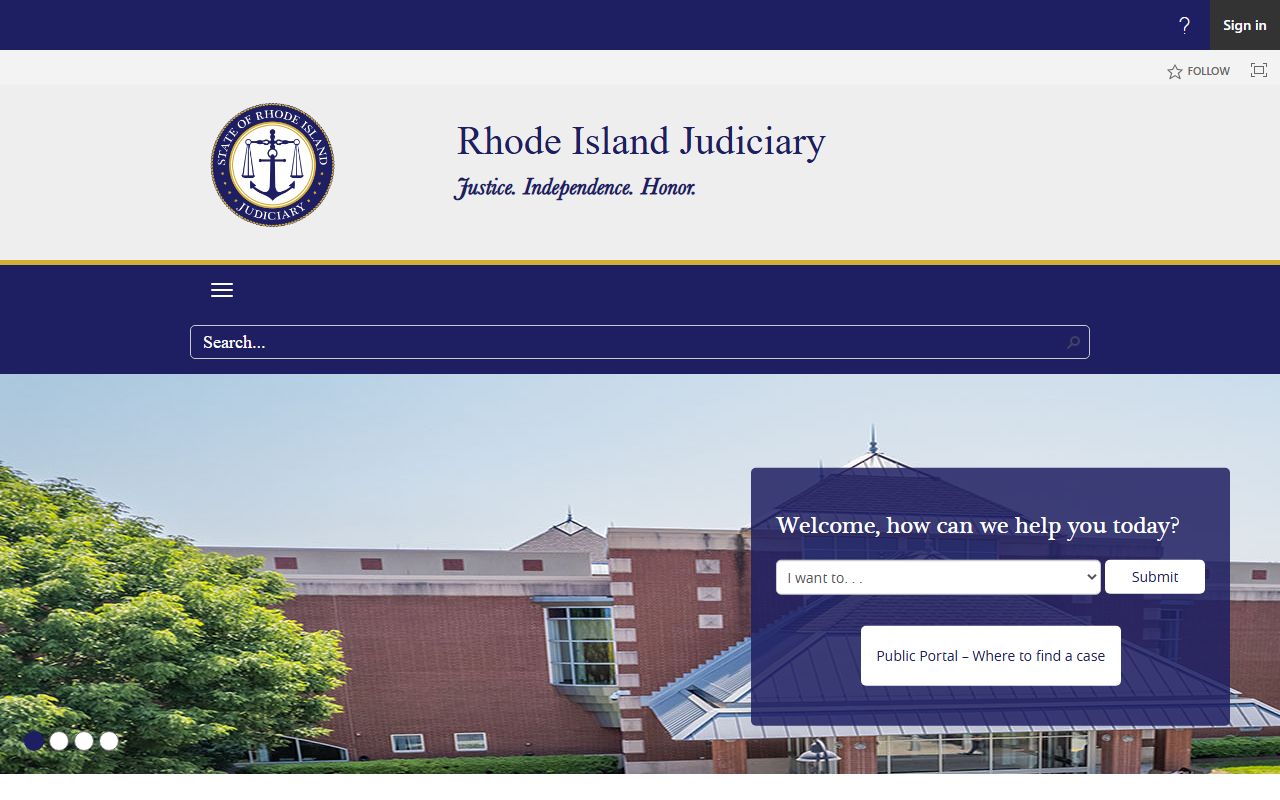
From that homepage, the Public Resources menu leads to case information, eFiling, and the portal link that opens the statewide docket search.
- Open the Access to Case Information page, then click through to the Rhode Island Judiciary Public Portal.
- Choose the public search option and enter a party name or a case number.
- Narrow the results by court and by date if the portal lets you.
- Open the matching case and read the register of actions for parties, events, and hearing dates.
- For the actual document or a certified copy, visit the right clerk's office and use a public terminal.
The portal covers the Supreme, Superior, Family, District, Workers' Compensation, and Traffic Tribunal courts. Sealed cases and confidential record types do not appear in public results.
| Field Label | Type | Required | Notes / Format |
|---|---|---|---|
| Smart Search | Text | Varies | Searches a party name or a case number. |
| Case Number | Text | Varies | Use the exact number; format changes by court and case type. |
| Party Name | Text | Varies | Use when you do not know the case number. |
| Court / Location | Dropdown | Varies | Filter by court where shown. |
Note: the portal gives remote users the docket only; filed documents and sealed matter stay off the public remote view.
The Providence County Judicial System
Rhode Island runs a small, state-based court system. There is no county trial-court clerk like the ones in Texas or Florida. The Supreme Court is the top appeals court. Below it, the Superior Court is the main trial court for felonies, large civil cases, and jury trials. The District Court handles misdemeanors, arraignments, bail, small claims, and landlord-tenant cases. Family Court hears divorce, custody, support, and juvenile matters. The Traffic Tribunal handles most traffic tickets.
Providence County's state court work is split between two downtown buildings. The Superior Court and Supreme Court sit at the Licht Judicial Complex. The District Court Sixth Division and Providence County Family Court sit at the Garrahy Judicial Complex.
Case flow: District Court › Superior Court › Rhode Island Supreme Court
| Court | Jurisdiction | Case Types |
|---|---|---|
| Rhode Island Supreme Court | Highest state appeals court | Appeals, court rules |
| Superior Court (Providence/Bristol) | General trial court | Felony, major civil, jury trials, TROs |
| District Court Sixth Division | Limited jurisdiction | Misdemeanors, arraignments, bail, small claims, landlord-tenant |
| Family Court (Providence County) | Family and juvenile | Divorce, custody, support, juvenile, restraining orders |
| Rhode Island Traffic Tribunal | Traffic violations | Tickets, fines, license consequences |
You can read more on the Providence County Superior Court page and the court records page.
Which Courthouse You Need in Providence County
People often confuse the two main downtown buildings. They sit close together, but they hold different courts. The Licht Judicial Complex at 250 Benefit Street holds the Supreme Court and the Providence/Bristol County Superior Court. The Garrahy Judicial Complex at One Dorrance Plaza holds the District Court Sixth Division, Family Court, and Workers' Compensation Court. Providence probate is different again, and it sits at City Hall.
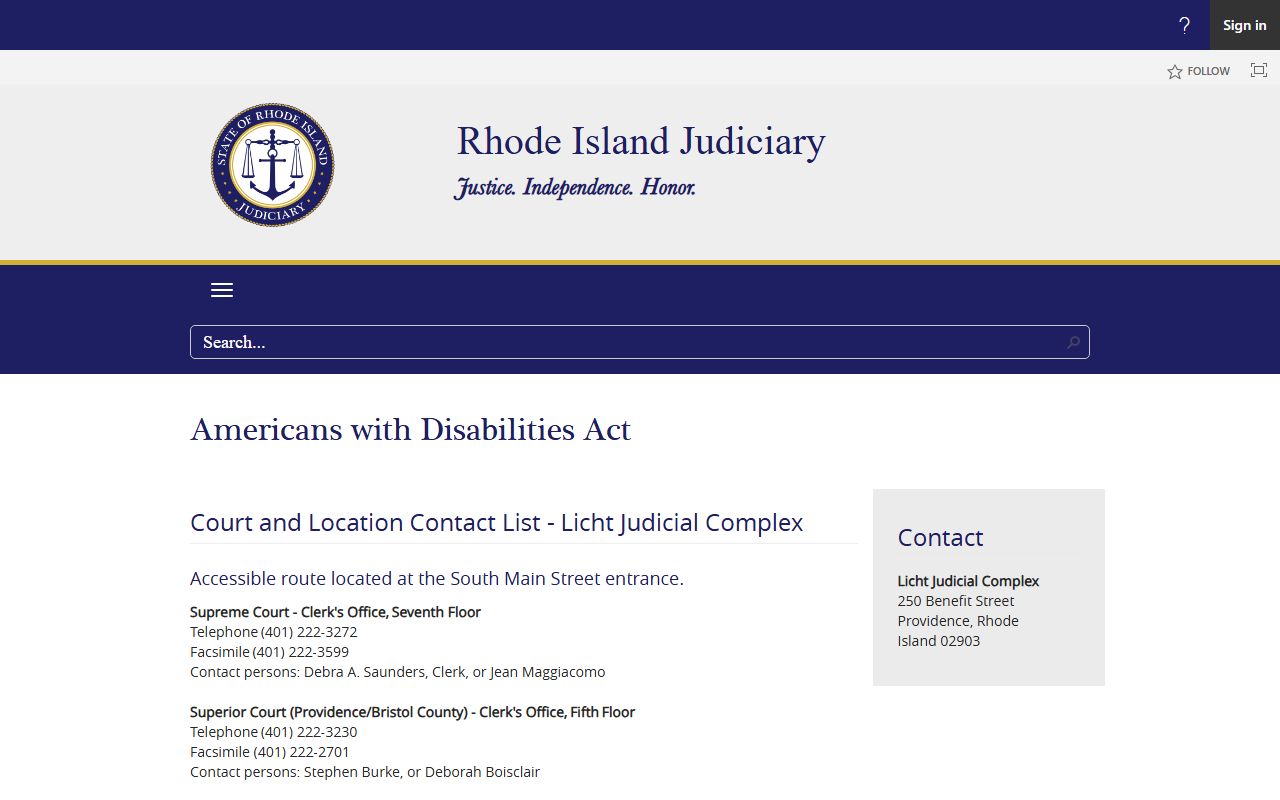
The Judiciary's access page for Licht lists the Superior Court Providence/Bristol County Clerk's Office on the fifth floor and the accessible route at the South Main Street entrance.
| Building | Courts Inside | Address |
|---|---|---|
| Licht Judicial Complex | Supreme Court, Superior Court | 250 Benefit Street, Providence, RI 02903 |
| Garrahy Judicial Complex | District Court Sixth Division, Family Court, Workers' Compensation | One Dorrance Plaza, Providence, RI 02903 |
| Providence City Hall | Providence Probate Court | 25 Dorrance Street, Providence, RI 02903 |
If you go to the wrong building, you can lose your whole morning. Check the court name on your notice first.
Types of Court Records Available in Providence County
Providence County court records cover many case types. Each court keeps its own kind of file. Superior Court holds felony and major civil records. District Court holds misdemeanor, small claims, and landlord-tenant records. Family Court holds divorce, custody, and juvenile files, though many family records are limited or sealed.
Here are the main record groups people search for.
- Criminal records - felony and misdemeanor cases, plus arrest and booking data through state agencies.
- Civil records - lawsuits, judgments, small claims, and landlord-tenant cases.
- Family and divorce records - divorce, custody, and support filed in Family Court.
- Probate records - estates, wills, and guardianships at the city or town level.
- Traffic records - tickets, fines, and hearings through the Traffic Tribunal.
What Providence County Court Records Show
A public docket in Rhode Island holds a set of standard fields. The Judiciary's public access rules define the case management system as tracking case numbers, party names, attorneys, document titles, and scheduled events. The portal then shows these as a register of actions in date order. Not every entry opens a PDF for a remote user.
| Field | What It Shows |
|---|---|
| Case Number | The unique court ID for the case. |
| Filing Date | When the case or paper was filed. |
| Parties | Plaintiff, defendant, petitioner, or respondent names. |
| Attorneys | Lawyers listed for each party. |
| Document Titles | Names of filed motions, orders, and pleadings. |
| Scheduled Events | Hearing dates and court events. |
| Disposition | The current or final outcome of a charge or claim. |
For a deeper look at the docket itself, see the Providence County court dockets page.
Public Access Laws for Providence County Court Records
Two systems control access. The Access to Public Records Act, known as APRA, covers state and city agency records. The Judiciary's own public access rules cover court case information. APRA is not a way to pull court documents; court files follow the court rules instead. This split matters in Providence County because some records sit with agencies and some sit with the courts.
Key Statutes:
R.I. Gen. Laws § 38-2-1 - states the purpose of APRA and balances public access with personal privacy.
R.I. Gen. Laws § 38-2-3 - gives the public the right to inspect and copy agency records.
R.I. Gen. Laws § 38-2-4 - sets the cost rules for copying and search time.
More detail sits on the public records page.
Records That Are Restricted or Confidential
Not every file is open. The Judiciary's public access rules keep sealed cases and confidential case types out of public view. Remote users see the docket, not the filed papers. Even courthouse terminals block sealed and confidential material. Juvenile and child welfare cases, adoption files, and expunged criminal records are tightly closed.
To view a sealed record, a person usually must be a party, an attorney of record, or someone with a court order. If you think a record should be open, ask the clerk's office about the right motion. The clerk cannot give legal advice, but staff can point you to the process and forms.
Specialty Courts in Providence County
Rhode Island runs several specialty programs that change how a case moves. The Superior Court Diversion Program is an alternative to a standard conviction and sentence. It offers eligible defendants supervision and services instead of jail. The Providence contact is at the Licht Judicial Complex, Room 618.
The Attorney General's Criminal Division also lists an Adult Drug Court and a Veteran's Court. These programs mix prosecution, supervision, and treatment for people who qualify. Eligibility rules are set by each program, so check the official pages before you assume a case fits. Family Court also runs a mediation program for custody and divorce disputes.
Providence County Sheriff and Jail Information
Rhode Island does not run a county sheriff jail the way many states do. The Rhode Island Division of Sheriffs is a state agency under the Department of Public Safety. It handles courthouse security, prisoner transport, extraditions, and service of process. Chief Sheriff Paul Martellini leads the division. Jail and prison custody is run by the state Department of Corrections at the Adult Correctional Institutions in Cranston.
For a person in custody, start with the state inmate search rather than a county roster. See the Providence County inmate records page for the full roster details, and the warrant records page for active warrants and missed court dates.
Marriage, Divorce, and Probate Records
Marriage licenses come from a city or town clerk, not a county office. Divorces are Family Court cases at the Garrahy Judicial Complex. Probate is handled by each city or town, so a Providence estate goes to the Providence Probate Court at City Hall. See the marriage and divorce records page and the probate records page for steps and forms.
- Testator
- A person who makes and leaves a valid will.
- Executor
- The person named in a will to settle the estate.
- Intestate
- Dying without a valid will, so state law sets who inherits.
- Guardianship
- A court order giving one person authority over another's care or estate.
Common Providence County Court Fees
Court fees in Providence County vary by court and case type. The research below pulls a few set fees from official Judiciary pages. Copy and certified-copy charges differ by clerk, so confirm the current amount with the office before you pay.
| Item | Amount |
|---|---|
| Superior Court TRO filing fee | $180.75 |
| Sheriff service fee for a TRO notice | $45 |
| Bench warrant fee for unpaid court obligations | $125 |
| Providence marriage license | $24 |
| Expungement motion | No fee per Superior Court FAQ |
The Overdue Court Fees page explains how unpaid Superior or District Court costs can lead to a warrant.
How to Read Providence County Court Records
Court files use terms that can confuse first-time readers. A charge is not the same as a conviction. An arrest or a charge only means a case began. A conviction means the court found guilt or the person pled guilty. A disposition is the outcome, such as dismissed, guilty, or not guilty. A continuance is a delay of a court date.
Watch the court name too. A Superior Court case and a District Court case can involve the same person but mean very different things. Read the full docket before you draw any conclusion, and confirm anything important with the clerk.
Accuracy and Record Limitations
Online court data can lag behind the paper or the courtroom. The portal shows the docket, but a recent filing may take time to post. Sealed and confidential items will not show at all. The state inmate search even warns that it is informational and not the official record.
Note: Always confirm a name, date, or outcome with the clerk's office or the agency that holds the file before you rely on it.
Providence County Courthouse Contacts
Three buildings cover most Providence County records. Use the right one for your case type and call ahead to confirm hours.
J. Joseph Garrahy Judicial Complex
One Dorrance Plaza
Providence, RI 02903
(401) 458-5400
Providence Probate Court
City Hall, 25 Dorrance Street
Providence, RI 02903
401-680-5000
History of Providence County Courts
Providence is the state capital and its largest city, and the courthouse system reflects Rhode Island's small-state shape. The Licht Judicial Complex on Benefit Street ties back to the old Providence County Courthouse and now holds the Supreme and Superior Courts. The Garrahy complex on Dorrance Plaza became the modern hub for District, Family, and Workers' Compensation cases. The federal court also sits downtown.
County names still matter for some court labels, like "Providence/Bristol County Superior Court." But county government lost most of its power long ago. That is why a search for a "Providence County Clerk" leads nowhere useful. People must use the state court clerks and the city or town clerks instead. The Judiciary has also moved to electronic filing through eFileRI, which changed how the public reaches records.
Frequently Asked Questions
Where do I search Providence County court records?
Use the Rhode Island Judiciary Public Portal through the official Access to Case Information page. Providence County records are part of a statewide system, not a county clerk database. Remote users can read the register of actions, which lists parties, events, and filings. To see filed documents, visit the right courthouse clerk's office and use a public terminal.
Why can't I find a Providence County Clerk of Court?
Rhode Island handles court records through state court clerks, sorted by court type. The Superior Court clerk is at Licht, while the District Court and Family Court clerks are at Garrahy. City and town clerks handle vital records, marriage licenses, and land records. There is no single county clerk for court files.
Can I download court documents from home?
Usually not. The Judiciary lets remote users view the docket, not the filed documents. Courthouse terminals give access to public electronic documents, but they still block sealed and confidential material. For a certified copy, ask the clerk's office.
More answers sit on the Providence County Court Records FAQ page.